The Hidden Risk of Dehydration in the Elderly: A Complete Guide to Prevention at Home
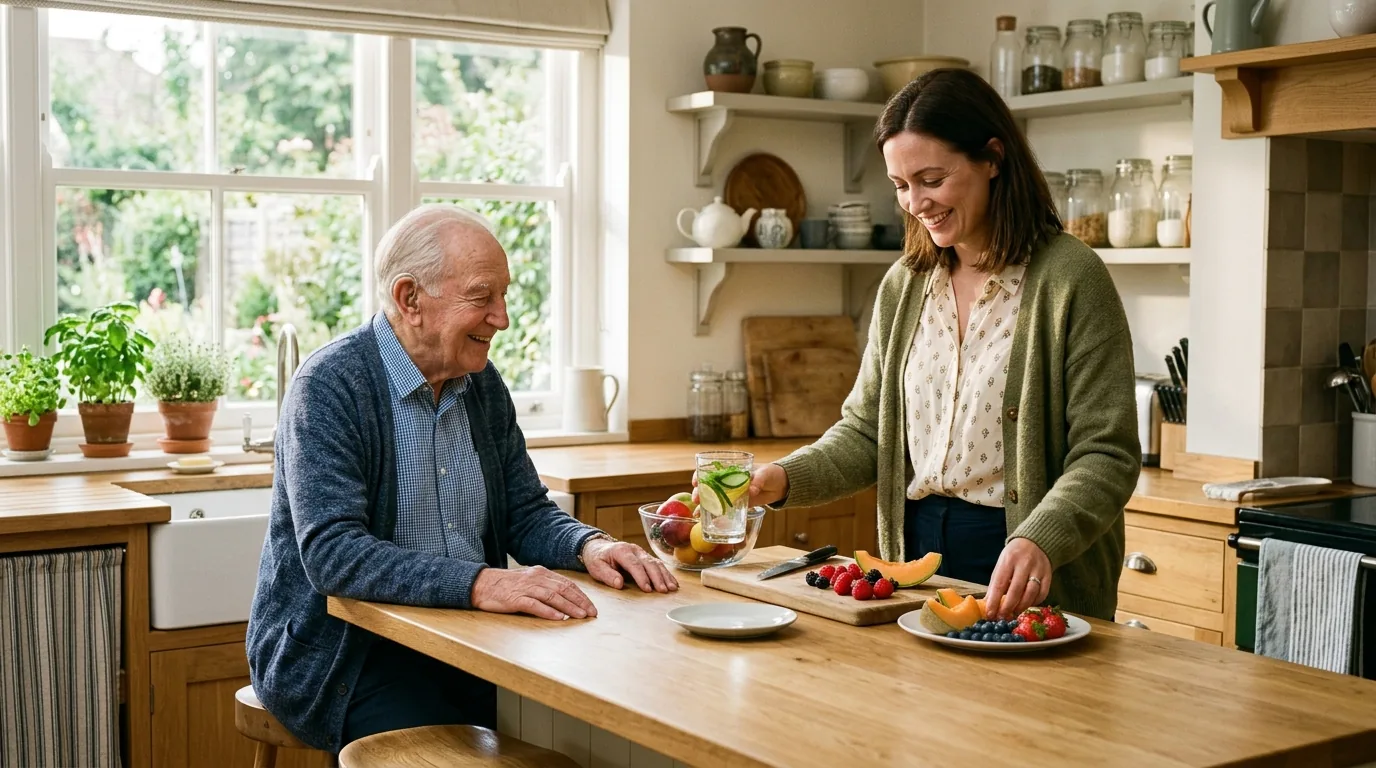
Water makes up roughly 60% of our bodies, acting as the engine oil that keeps our joints lubricated, regulates our temperature, and ensures vital organs function correctly. However, as we age, maintaining healthy hydration levels becomes significantly more challenging.
Dehydration is one of the most frequent—yet highly preventable—causes of hospital admissions for older adults in the UK. For families arranging private care in the UK, understanding how to monitor fluid intake and spot the subtle early warning signs is a crucial part of keeping a loved one safe, comfortable, and independent at home.
The Biological Shift: Why Fluid Loss Accelerates with Age
Dehydration in later life is rarely just about forgetting to drink water; it is often driven by natural physiological changes and compounding health factors.
Recognising the Warning Signs: A Progressive Scale
Because the sensation of thirst is unreliable in older adults, family members and those providing homecare must rely on physical and behavioural cues.
The Early Indicators
Catching dehydration early makes all the difference. Look out for:
The Link Between Dehydration and Sudden Confusion
One of the most misunderstood symptoms of poor hydration is cognitive decline. A lack of water heavily impacts brain function. If your loved one suddenly seems disoriented, unusually agitated, or drowsy, dehydration could be the primary culprit. (Read our complementary guide on dehydration symptoms and daily checks for more insights).
This is particularly critical for individuals receiving specialist dementia home care UK, as the symptoms of dehydration can easily mimic or temporarily worsen the signs of cognitive decline.
Critical Symptoms (When to act immediately)
If fluid levels drop dangerously low, it becomes a medical emergency. You should contact a GP or call 111 if you observe:
Emergency Note: If your loved one loses consciousness, experiences a seizure, or deteriorates rapidly, call 999 immediately. Do not wait.
Two Quick Hydration Checks You Can Do at Home
If you are unsure whether your loved one is drinking enough, these two simple checks can provide quick insight:
Need Trusted Support to Keep Your Loved One Hydrated & Safe?
Connect directly with fully vetted, self-employed private carers across the UK for flexible one-to-one home support, respite care, and live-in care.
Practical Strategies to Boost Daily Fluid Intake
The NHS suggests a target of six to eight glasses of fluid daily. Reaching this goal requires making hydration effortless and enjoyable.
Total Peace of Mind with Direct Home Support
Managing a loved one’s daily health metrics while balancing your own life can be overwhelming. If you are struggling to maintain their routine, No1 Healthcare Private Carers offers a direct, affordable solution.
By using our platform, you can bypass the rigid structures and high fees of traditional agencies to connect directly with fully vetted private carers in the UK.
Whether you need someone to drop by for a few hours of visiting care in the UK to prepare nutritious, water-rich meals, or require the continuous reassurance of live-in care in the UK, you are in total control. Your chosen professional will integrate seamlessly into your loved one’s life, diligently monitoring their hydration, managing their medication, and ensuring they remain safe and healthy in the comfort of their own home.
Call the No1 Healthcare team today on
.png)
.png)
.png)